
Most of the anxiety around starting with a new agency — or launching paid ads for the first time — comes from not knowing what “normal” looks like. Is a slow first two weeks a red flag or expected? Should CPA be dropping by week three? Nobody tells you, so every fluctuation feels like a crisis.
Tags
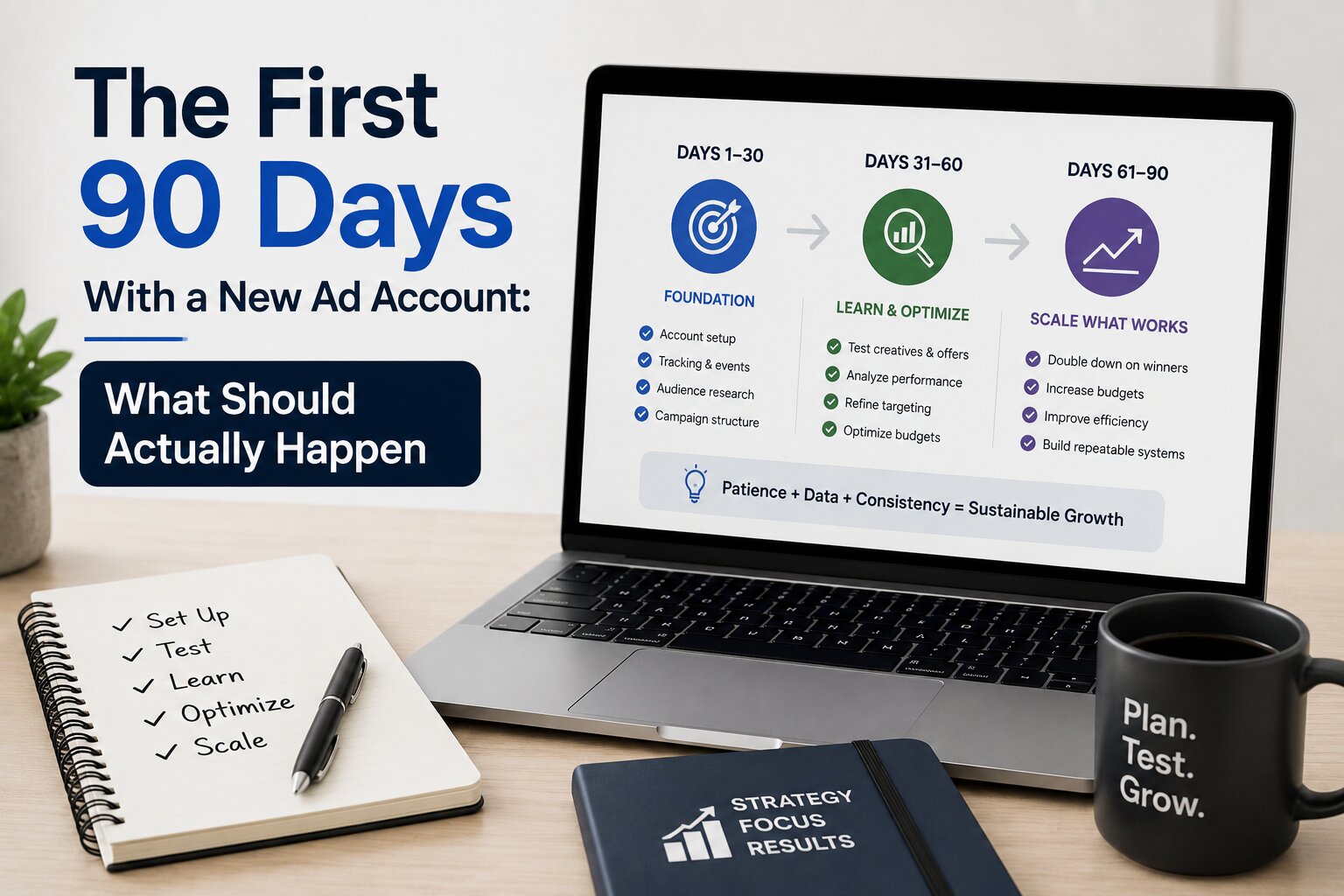
Here’s the honest timeline, based on what we actually see across new accounts.
Days 1-14: Setup and Audit, Not Results
If an agency is already promising results in week one, be skeptical. The first two weeks should look like this:
- Full account audit (existing pixel/conversion tracking, historical data, past creative performance).
- Tracking and attribution setup — pixel verification, conversion API, UTM structure.
- Audience and offer research specific to your business, not templated.
- Creative brief and first batch of ad assets.
What’s normal: little to no spend, or small test budgets only. What’s a red flag: full budget live before tracking is verified — that’s how you burn RM5,000 finding out your pixel wasn’t firing.
Days 15-30: Learning Phase
Campaigns go live, but the algorithm is still learning who converts. Expect:
- CPA to be higher and more volatile than target — this is expected, not a failure.
- Frequent testing: multiple creatives, audiences, and placements running simultaneously.
- Weekly (not daily) optimization — platforms need data volume before signals stabilize, and constant tinkering resets the learning phase.
A reasonable target by day 30: performance data clear enough to know which creative angles and audiences are worth scaling — not necessarily profitable CPA yet.
Days 31-60: Stabilization and First Scale Decisions
This is where a good account starts to separate from a mediocre one.
- Underperforming creatives and audiences get cut — if nothing has been paused by day 45, that’s worth asking about.
- Winning combinations get incremental budget increases (20-30%, not doubled overnight).
- First real read on whether CPA/ROAS is trending toward the pre-agreed target range.
Red Flags at This Stage
- No creative refresh since launch.
- Reporting still framed only around platform metrics, with no mention of actual profitability.
- Vague answers when you ask “what’s working and why.”
Days 61-90: Proof Point
By day 90, you should have enough data to make an informed decision about scaling further — not a guess.
- A clear read on blended CAC and whether it’s within your break-even threshold.
- At least one full optimization cycle completed (test → cut losers → scale winners).
- A documented plan for the next quarter, not just “keep doing what’s working.”
What Should NOT Happen in 90 Days
- Radical account restructuring more than once — constant rebuilding resets learning and hides whether the strategy actually works.
- Reporting gaps or missed check-ins — inconsistency here usually predicts inconsistency in the actual media buying.
- A sudden CPA “improvement” with no explanation — sometimes this means real optimization, sometimes it means attribution windows or campaign objectives were quietly changed to make the number look better.
The Uncomfortable Truth
Ninety days is enough time to know if an account is being run well — but it’s not enough time to declare final victory or defeat. Businesses that panic and switch agencies at day 20, or that stay loyal to a bad setup past day 90 because “it just needs more time,” both tend to make the same mistake: judging the account on the wrong timeline.
Not sure which option makes the most financial sense for your business? Book a free strategy call and we'll review your numbers honestly—even if the conclusion is that you don't need an agency yet.